



salento experience
News Baia di Gallipoli Camping Resort
Gallipoli
The "beautiful city" of Salento
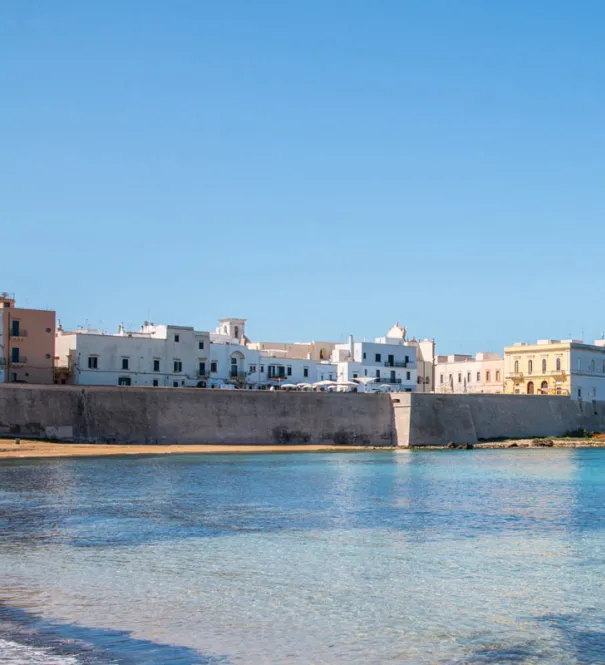
Divided between the modern village and the historic center, built on a limestone island connected to the mainland by a bridge, Gallipoli is a city best discovered on foot: bright alleys, sea views, noble palaces, and a port that still reflects its maritime soul today.
Beneath the most photographed surface, however, lies another Gallipoli, "underground ": in the 18th and 19th centuries, the lampante oil trade flourished here, used for lighting and in demand in major European markets, to the point of even being listed on the London Stock Exchange. Reminiscent of this are the ancient underground olive presses (trappeti ), dug into the rock beneath some buildings in the historic center: places of extremely hard work, but crucial to the city's wealth and to the face that Gallipoli still displays.
This richness is also found in the churches, numerous and often very close to each other , like a natural itinerary through art, confraternities, and devotion. Deciding which is the "most beautiful" church is difficult: many visitors oscillate between two very different masterpieces. The Cathedral of Sant'Agata is striking for its majesty and its façade in local stone, while inside it is often described as a sort of "art gallery" due to the large canvases that cover the walls and vaults.
The Church of Santa Maria della Purità , overlooking the sea, is of a completely different tone: sober and bright on the outside, surprising on the inside, rich in paintings, stuccoes, and decorative details. Here, too, lies one of Gallipoli's most unusual curiosities : the large canvas in front of the altar can be raised, and behind it, it houses ancient frescoes of the four Evangelists, normally hidden from view.
The historic center also preserves other unusual details, such as the Church of San Francesco d'Assisi , home to the famous statue of the "Mal Ladrone ," known for its intense and impressive realism. And among the churches and monasteries, there are also spaces that are now cultural venues, such as the area associated with San Domenico, with the former monastery complex and cloister, often used for events and exhibitions.
Gallipoli, in short, is not just sea and beaches: it is a city built on layers, above and below ground, where the oil age, port life and Baroque art have left traces that are still legible, provided you take the time to observe.
Beneath the most photographed surface, however, lies another Gallipoli, "underground ": in the 18th and 19th centuries, the lampante oil trade flourished here, used for lighting and in demand in major European markets, to the point of even being listed on the London Stock Exchange. Reminiscent of this are the ancient underground olive presses (trappeti ), dug into the rock beneath some buildings in the historic center: places of extremely hard work, but crucial to the city's wealth and to the face that Gallipoli still displays.
This richness is also found in the churches, numerous and often very close to each other , like a natural itinerary through art, confraternities, and devotion. Deciding which is the "most beautiful" church is difficult: many visitors oscillate between two very different masterpieces. The Cathedral of Sant'Agata is striking for its majesty and its façade in local stone, while inside it is often described as a sort of "art gallery" due to the large canvases that cover the walls and vaults.
The Church of Santa Maria della Purità , overlooking the sea, is of a completely different tone: sober and bright on the outside, surprising on the inside, rich in paintings, stuccoes, and decorative details. Here, too, lies one of Gallipoli's most unusual curiosities : the large canvas in front of the altar can be raised, and behind it, it houses ancient frescoes of the four Evangelists, normally hidden from view.
The historic center also preserves other unusual details, such as the Church of San Francesco d'Assisi , home to the famous statue of the "Mal Ladrone ," known for its intense and impressive realism. And among the churches and monasteries, there are also spaces that are now cultural venues, such as the area associated with San Domenico, with the former monastery complex and cloister, often used for events and exhibitions.
Gallipoli, in short, is not just sea and beaches: it is a city built on layers, above and below ground, where the oil age, port life and Baroque art have left traces that are still legible, provided you take the time to observe.